
Bathrooms create ideal mould conditions because steam, frequent wetting and limited drying time all work against you. The good news is that many bathroom mould problems are on washable surfaces where a careful treatment routine can make a visible difference. The important part is matching the product and method to the surface, then improving how quickly the room dries out afterwards.
Start by separating the surfaces
Bathroom mould is often treated as one problem, but grout, silicone, painted ceilings and hard washable surfaces can behave differently.
- Grout can hold contamination in its textured surface.
- Silicone seals may stain deeply or degrade over time.
- Painted ceilings can need a different treatment route from tiles or glass.
- Shower enclosures and hard surfaces are usually easier to clean but still need regular drying.
Treat the surface you actually have, not the whole room as if it were one material.
Step 1: Improve ventilation before and after treatment
Run extraction during cleaning and keep the room ventilated. If the bathroom usually stays damp for hours after use, recurring mould is likely unless airflow improves.
Even a well-chosen cleaning product will struggle to keep pace with a room that never properly dries.
Step 2: Treat visible mould on suitable washable surfaces
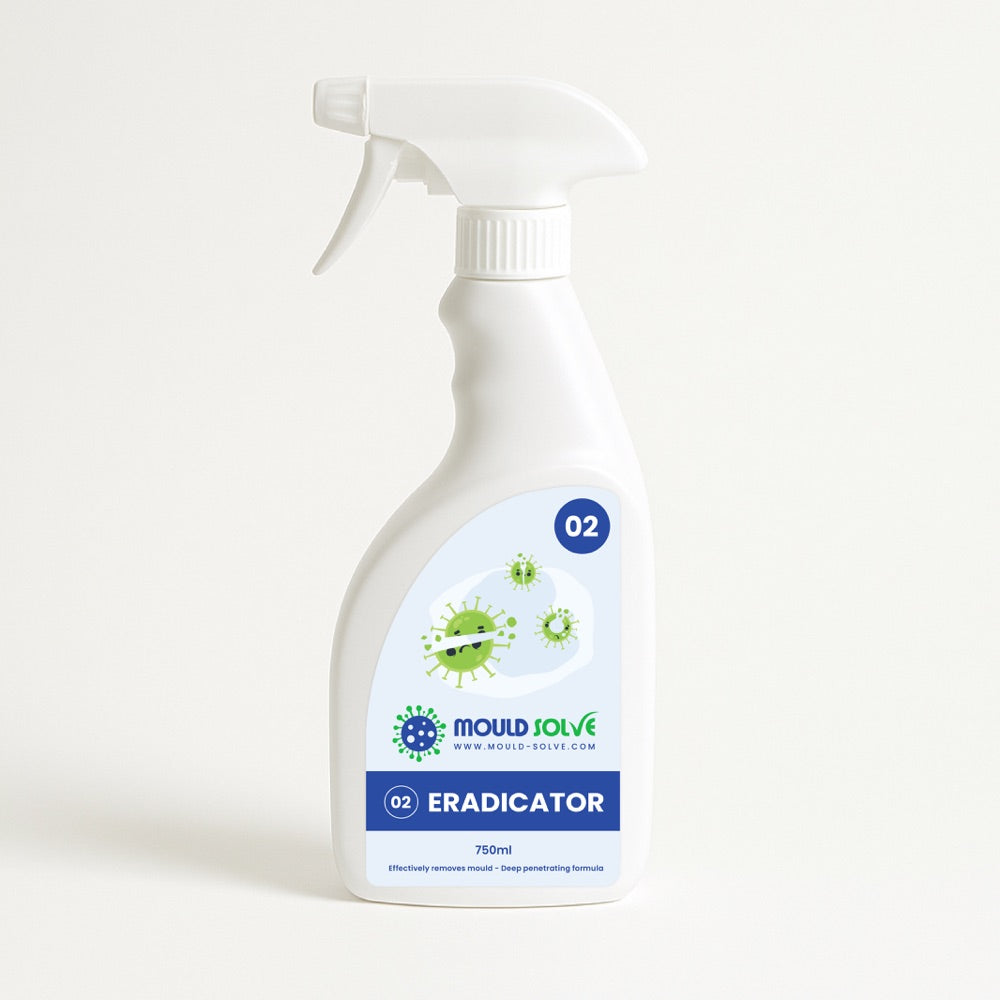
!Mould Solve Mould Eradicator Spray 750ml
For visible mould on tiles, sealed hard surfaces and other washable bathroom areas, start with a product from the Mould Removal Sprays collection and follow the usage directions carefully.
Work in sections and avoid spreading residue with one cloth across the whole room. Replace wipes or cloths as they become dirty.
Step 3: Pay attention to grout and silicone
Grout and silicone often show the most stubborn staining because they are detailed, porous or constantly exposed to moisture.
If mould sits mainly on the surface, careful treatment may improve it significantly. If the silicone is permanently stained, split, lifting or degraded, cleaning alone may not restore it. In that case, replacement may be the better route after the area has been cleaned and dried.
Step 4: Dry the room down
This step matters almost as much as the treatment itself. Try to reduce the time surfaces stay wet by:
- running extraction after showers
- opening ventilation where practical
- wiping down heavily wetted surfaces
- avoiding repeated steam build-up with no airflow
Bathrooms that stay damp for long periods tend to grow mould back fastest.
Step 5: Protect the room where appropriate
If the problem extends onto painted areas or repeatedly affects the same bathroom surfaces, a prevention or finishing stage may help. Review the Mould Prevention & Primers collection for preparation products and the Anti-Mould Paint range for suitable finishing routes on decorated surfaces.
When a kit makes sense
If the bathroom problem is not just a small patch on grout but part of a wider recurring issue, a coordinated system may be easier to follow than choosing products one by one. The Mould Treatment Kits are the clearest place to compare that route.
Common bathroom mould mistakes
- cleaning the visible mould but never improving extraction
- treating silicone as if it can always be restored
- using one approach for tiles, ceilings and painted walls
- repainting too soon on damp bathroom ceilings
- ignoring persistent leaks around baths, trays or pipework
FAQs
Can I use the same treatment on grout and a painted ceiling?
Not automatically. Bathroom surfaces vary, so always check suitability and follow the product directions.
Why does mould return around the shower so quickly?
Usually because the area stays wet for long periods and has repeated steam exposure with limited drying.
When should silicone be replaced?
If it remains badly stained, damaged, lifting or degraded after cleaning and drying, replacement is often the better long-term fix.

