
Visible mould on painted walls or ceilings usually points to a moisture problem as well as a cleaning problem. The right approach is to remove the visible growth carefully, follow the product directions for the surface you are treating, and reduce the condensation or damp conditions that allowed the mould to grow in the first place.
Before you start
- Check the affected area is suitable for the product you plan to use.
- Wear appropriate protection and keep the room ventilated.
- Avoid dry brushing mould, which can spread contamination.
- If the area is large, repeatedly returning, or linked to a leak, flooding or hidden damp, surface treatment alone may not be enough.
Step 1: Identify what you are treating
Painted plaster, painted masonry and painted ceilings can often be treated as washable decorated surfaces, but finish and condition matter. Flat paint, damaged paint and soft or flaking coatings may react differently from sound, washable paint.
If the paint film is already failing, clean-up alone will not give a lasting finish. In that case, treat the mould, let the area dry, repair or prepare the surface properly, and only then redecorate.
Step 2: Remove visible mould carefully
Apply a suitable mould removal product according to its instructions. Work methodically so the treated area is fully covered and do not over-saturate the surface.
When the product directions allow, wipe away loosened contamination with disposable cloths or paper towels. Replace them as needed rather than spreading residue around the room.
Step 3: Let the surface dry fully
Drying matters. Even if the mould looks gone, decorating or overcoating too early can trap moisture and lead to a patchy or short-lived result.
Allow the treated area to dry thoroughly. Improve airflow where possible and deal with any obvious condensation source such as poor extraction, furniture pressed against cold external walls, or consistently closed trickle vents.
Step 4: Decide whether the wall needs a second stage
If the room has a history of recurring condensation mould, a removal stage may need to be followed by a preventative or protective stage. That could mean a primer, blocker or specialist anti-mould coating, depending on the condition of the wall and the finish you want to achieve.
The key point is sequence: remove first, prepare second, protect last.
Step 5: Prevent it from coming back
Removing visible mould is only part of the job. If the room stays cold, humid or poorly ventilated, mould can return even after a careful clean.
Focus on the conditions that feed regrowth:
- improve ventilation in bathrooms, kitchens and bedrooms
- reduce persistent condensation on cold spots
- dry clothes with ventilation or extraction
- check for leaks, bridging damp or other building defects
- keep large furniture slightly clear of cold external walls where possible
Recommended treatment route
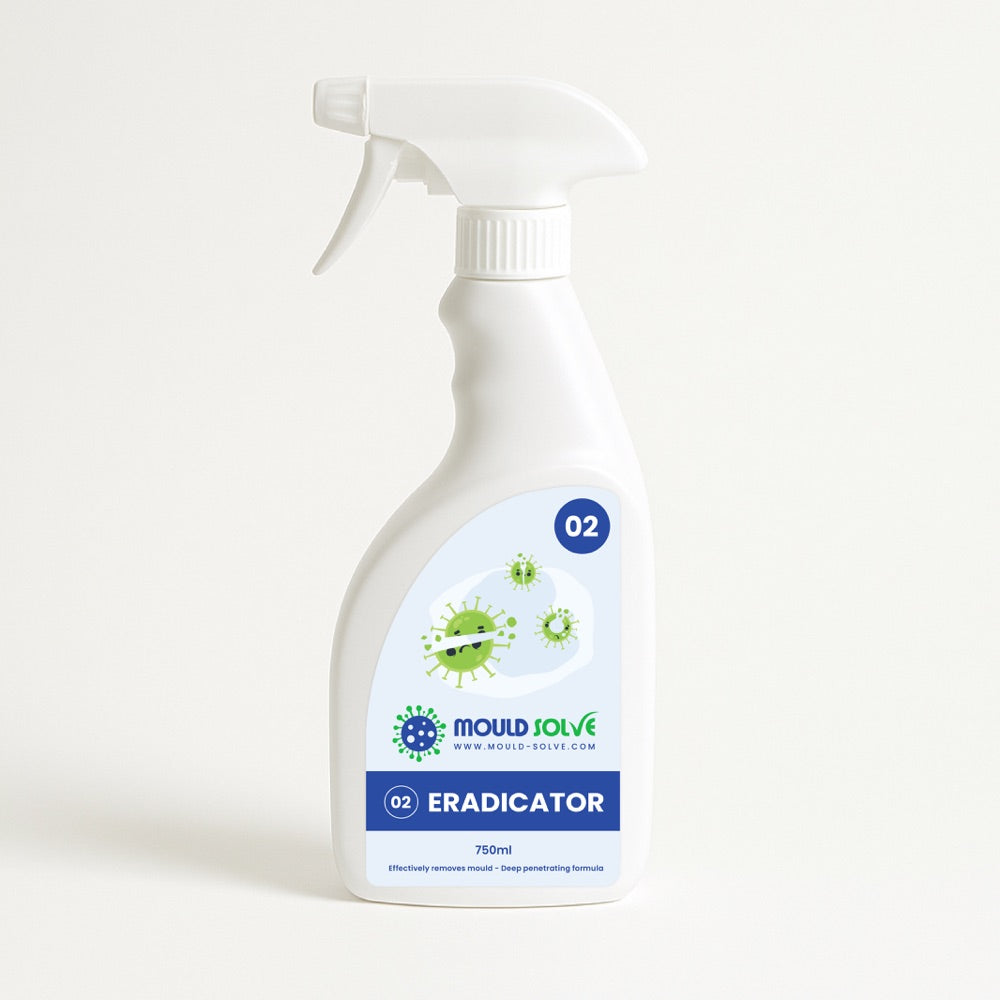
!Mould Solve Mould Eradicator Spray 750ml
If you are treating visible mould on painted walls or ceilings, start with the Mould Removal Sprays collection. If you want a more complete remove, treat and protect route, compare the Mould Treatment Kits.
If the surface is dry, sound and ready for finishing after treatment, the Anti-Mould Paint range can help complete the final stage.
When to stop and get more help
Surface treatment is not the whole answer when:
- mould covers a large area
- the same patches keep returning quickly
- the problem follows a plumbing leak or flooding
- the wall feels damp or the paint keeps failing
- there may be hidden mould behind finishes or furniture
In those cases, investigate the moisture source before relying on decoration or repeated cleaning.
FAQs
Can I paint straight over mould?
No. Painting over visible mould or a damp surface is unlikely to solve the problem and can shorten the life of the finish.
Why does mould come back on the same wall?
Usually because moisture is still present through condensation, poor airflow, a cold bridge, a leak or another damp issue.
Should I use a treatment kit instead of a single product?
If you want a clearer step-by-step route, a kit can make sense because it groups complementary stages rather than leaving you to piece them together yourself.

