
Painting is often the stage people want to reach fastest, but it should come after the mould problem has been treated properly. This checklist is designed to help you avoid decorating too early and ending up with the same patch coming back through the finish.
Pre-paint checklist
1. Has the visible mould been removed?
If mould is still visible, do not move straight to paint. Start with the Mould Removal Sprays collection and treat the affected area correctly first.
2. Has the moisture source been considered?
Before painting, ask why the mould appeared:
- condensation?
- poor ventilation?
- a cold wall?
- a leak or damp issue?
If the moisture problem continues, the finish may fail again.
3. Is the surface fully dry?
This is one of the most important checkpoints. A wall can look improved before it is actually ready for decoration. If the surface is still damp, cool-wet to the touch, or staining through, wait before painting.
4. Does the wall need preparation first?
Preparation may be needed when:
- a water stain remains
- the old finish is patchy or damaged
- the surface has been repaired
- you need to block discolouration before decorating
That is where Mould Prevention & Primers fit into the route.
5. Are you now at the final finishing stage?
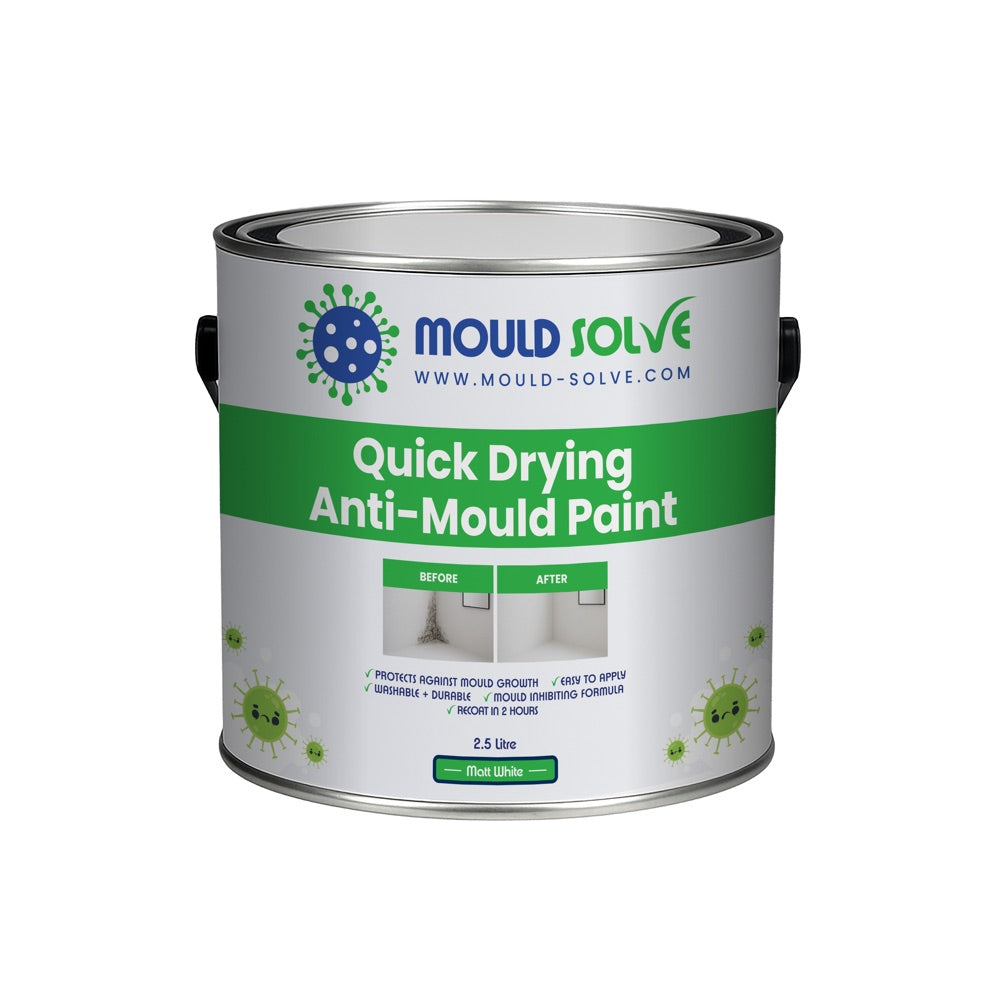
!Mould Solve Quick Drying Anti-Mould Paint 5L in matt white
Once the surface has been cleaned, dried and prepared properly, the finishing stage can move into Anti-Mould Paint where that is the correct route for the room and substrate.
Common pre-paint mistakes
- painting directly over visible mould
- using decorative paint to hide a stain that should have been blocked first
- skipping the drying stage
- assuming paint solves the underlying moisture cause
A simple order to remember
- remove
- prepare
- paint and protect
If you want all three stages grouped more clearly, compare the Mould Treatment Kits.

