
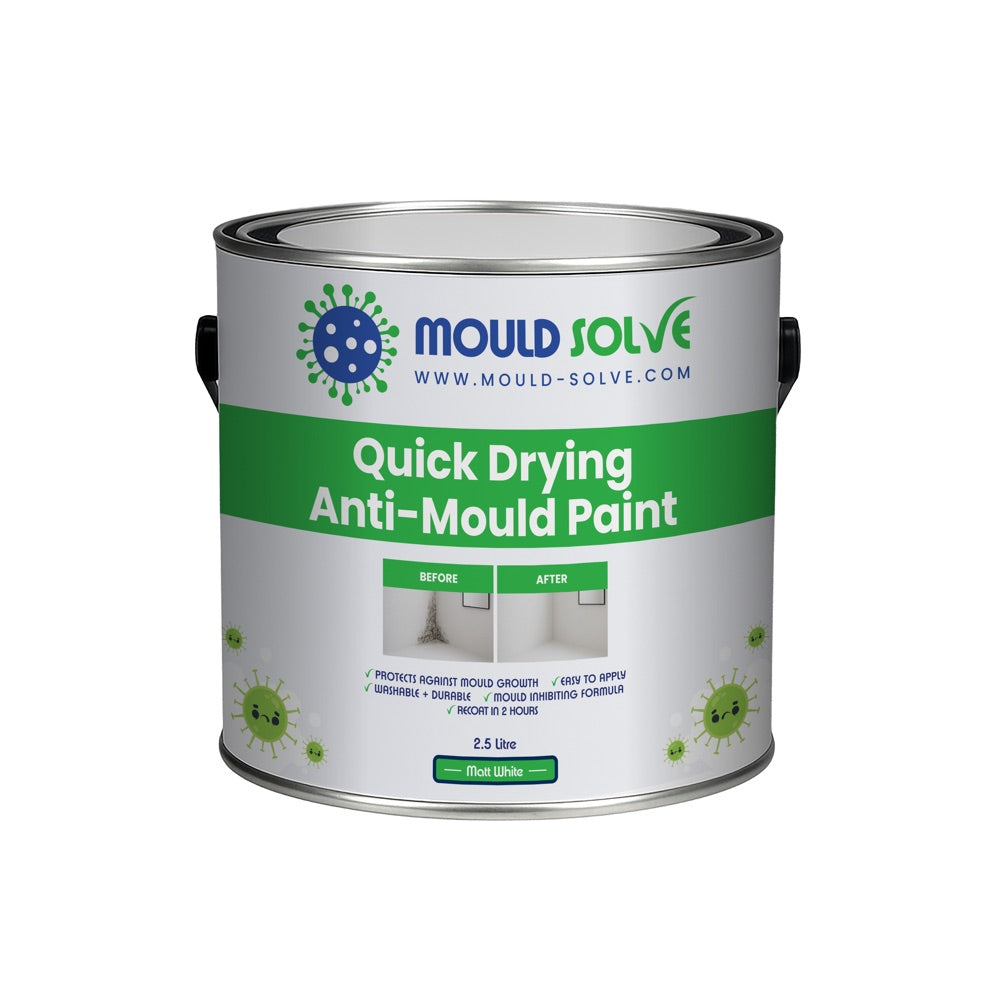
Anti-mould paint works best as the final stage of a treatment process, not as a shortcut around cleaning, drying and preparation. If visible mould, staining or damp conditions are still present, applying paint too soon can leave you with a poor finish and a problem that returns.
The short answer
Before anti-mould paint, most surfaces need three things:
- Visible mould removed correctly
- The moisture source addressed as far as possible
- The surface clean, dry and properly prepared for coating
Depending on the condition of the wall, you may also need a primer or stain-blocking stage before the decorative finish.
Start with mould removal, not decoration
If there is visible mould on the wall or ceiling, that needs to be treated first. Anti-mould paint is not a substitute for removing active growth.
!Mould Solve Mould Eliminator Spray 750ml
Use a suitable product from the Mould Removal Sprays collection and follow the label directions for the surface. Once treatment is complete, allow the area to dry fully before moving to the next stage.
Deal with the cause of the moisture
Even a good coating struggles if the wall is still being fed by condensation or damp. Before painting, ask why the mould appeared:
- Is the room poorly ventilated?
- Is there a cold external wall?
- Has there been a leak or penetrating damp?
- Is the surface still wet or staining through?
Surface treatment and protective paint can support a better result, but they should sit alongside moisture control, not replace it.
Decide whether you need a preparation coat
Some walls are ready for a finishing coat after cleaning and drying. Others need more preparation because the previous damage has left staining, porosity or patchiness behind.
You may need a preparation product when:
- a water mark or brown stain remains
- the old finish is patchy after cleaning
- the substrate has been repaired
- you want to isolate discolouration before decorating
For that stage, review the Mould Prevention & Primers collection.
Make sure the wall is actually dry
This is where many decorating jobs go wrong. A wall can look improved while still holding moisture. Decorating too early can affect adhesion, coverage and appearance.
Before applying anti-mould paint:
- wait for the treated area to dry fully
- check the surface feels stable and ready for coating
- avoid painting into ongoing condensation or recent leak conditions
If a room is still heavily condensing, improve extraction and airflow first.
Prepare the surface for a better finish
Once the wall is dry, remove loose or failing material, make good any damage and ensure the surface is fit for coating. The exact preparation depends on the substrate and the condition of the existing finish, but the goal is always the same: give the final coat a stable, clean base.
Where anti-mould paint fits in
Anti-mould paint belongs at the protect stage of the treatment route. A simple way to think about it is:
- Remove visible mould
- Prepare and block where needed
- Paint and protect
If you want those stages grouped more clearly, compare the Mould Treatment Kits.
Common mistakes to avoid
- Painting directly over visible mould
- Skipping the drying stage
- Ignoring the moisture source
- Using decorative paint to hide a stain that should have been blocked first
- Expecting one product to solve every surface and every cause
FAQs
Can anti-mould paint kill mould?
It should not be treated as a replacement for the mould removal stage. Visible mould should be dealt with first.
Do I need a primer before anti-mould paint?
Sometimes. It depends on staining, surface condition and whether the wall needs a preparation or blocking stage.
What if the wall keeps getting condensation?
Improve ventilation and moisture control before expecting a lasting decorating result. Otherwise the same area may fail again.

