
A musty smell is often noticed before anything is seen. It tends to be strongest when you walk into a room after being out, in cupboards and wardrobes, or first thing in the morning. It is worth taking seriously, because a damp smell almost always means moisture is present somewhere, even when the walls look fine.
What the smell actually is
The characteristic damp or musty smell comes from compounds released as mould and similar growth develop on damp materials. That means the smell is a symptom of active moisture rather than a problem to be covered over.
Masking it with air freshener changes nothing underneath. Clearing it properly means finding the damp material, dealing with the growth and improving the conditions.
Where to look when nothing is visible
Start with the places that stay cool, still and out of sight:
- behind and under large furniture on external walls
- inside built-in wardrobes and cupboards, especially on outside walls
- under sinks and behind kitchen and bathroom units
- inside airing cupboards and around hot water tanks
- in the corners of the loft hatch and around roof lights
- under carpets and underlay near external doors
- behind bath panels and shower enclosures
- around window reveals and sills
- inside washing machines, dishwashers and their door seals
- in stored items such as boxes, books, luggage and bedding
Also check for anything holding water that should not be, such as a slow waste leak, a dripping valve, a blocked gutter running down an external wall, or a shower tray seal that has failed.
Clearing the smell in the right order
- Find and stop any active water source first
- Let the affected material dry as fully as possible
- Treat visible growth on suitable hard surfaces
- Remove or clean affected soft items separately
- Ventilate the room properly rather than sealing it up
- Address the airborne stage in the room once surfaces are dealt with
- Keep conditions right so it does not return
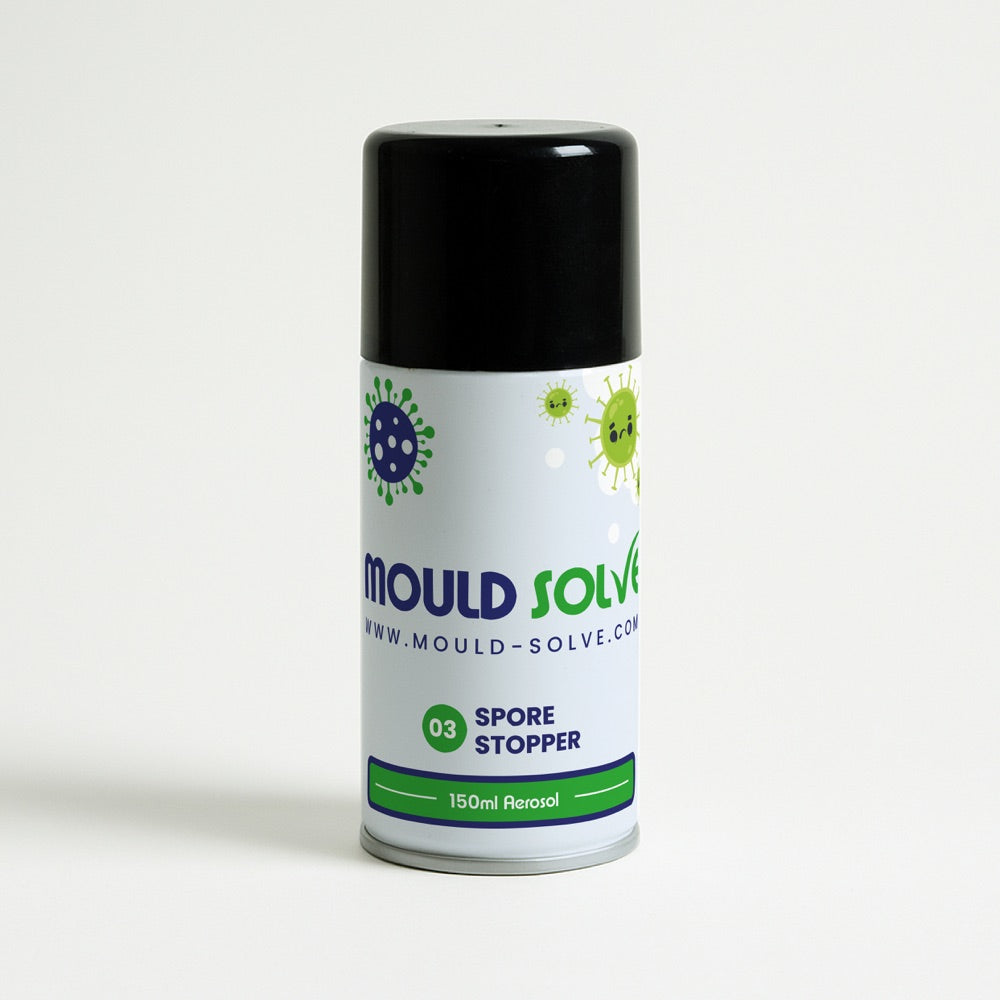
!Mould Solve Spore Stopper Mould Fogger 150ml
For the surface treatment stage, start with Mould Removal Sprays. If the problem covers a whole room, the Mould Treatment Kits bring the stages together, including options that address the room rather than only the surface.
Why the smell can linger after cleaning
There are three usual reasons a room still smells after the visible growth has been dealt with.
The material is still damp. Plaster, timber, underlay and chipboard hold moisture long after the surface feels dry. Until it dries, the smell continues.
Something absorbent is still affected. Carpet, underlay, curtains, stored fabric and cardboard hold the smell strongly. A wall can be spotless while the underlay beneath it is the actual source.
The air in the room has not been dealt with. In an enclosed room with limited airflow, treating the surface is only part of the job.
Cupboards, wardrobes and storage
Enclosed storage is the classic musty smell location, because it combines cold external wall, no airflow and absorbent contents.
- empty it fully rather than treating around the contents
- check the back and base panels, which are usually worst
- leave doors open for a period while the space dries
- avoid returning items until the space is dry
- do not store damp or barely dry laundry in enclosed spaces
- leave a gap behind free-standing units on outside walls
When a musty smell needs investigating properly
Some smells are telling you about a defect rather than a ventilation habit. Get the property looked at if:
- the smell is strong and constant regardless of weather or season
- it follows a known leak, flood or roof problem
- it is worse at low level, near skirtings or under floors
- there is a tidemark or spreading stain on a wall
- floorboards or timbers feel soft
- the smell returns quickly after thorough treatment and drying
There is more detail in when surface treatment is not enough.
Keeping a room fresh afterwards
- ventilate briefly and widely rather than leaving rooms sealed
- run extractor fans during and after showering and cooking
- keep background heating steadier in colder months
- avoid drying laundry in closed rooms
- keep furniture slightly off external walls
- check enclosed storage a few times a year
FAQs
Does a musty smell always mean mould?
Not always, but it usually means damp material somewhere. Damp materials tend to develop growth over time, so the smell is worth acting on either way.
Will an air freshener or scented plug-in help?
Only by masking it. The underlying moisture and growth remain, and the smell returns when the fragrance fades.
Can a dehumidifier remove the smell?
It can help by reducing moisture levels, which slows growth, but it does not treat material that is already affected. See do dehumidifiers stop mould?
Why does the smell come back every winter?
Because colder surfaces and reduced ventilation return with the season. That pattern usually points to condensation rather than a leak. See how to stop mould returning after winter.

