
Landlords and property managers often need a treatment route that is practical, repeatable and easy to communicate across multiple properties. The challenge is not only removing visible mould, but also deciding when the issue looks like a routine condensation problem and when it may need deeper investigation.
A simple checklist
- Identify the surface affected and the approximate extent of mould
- Check for obvious leaks, staining or wider damp indicators
- Treat visible mould on suitable surfaces using the appropriate removal stage
- Record whether the room needs preparation before redecoration
- Review ventilation, extraction and condensation risk in the space
- Escalate repeated or suspicious cases for further investigation
Product route by stage
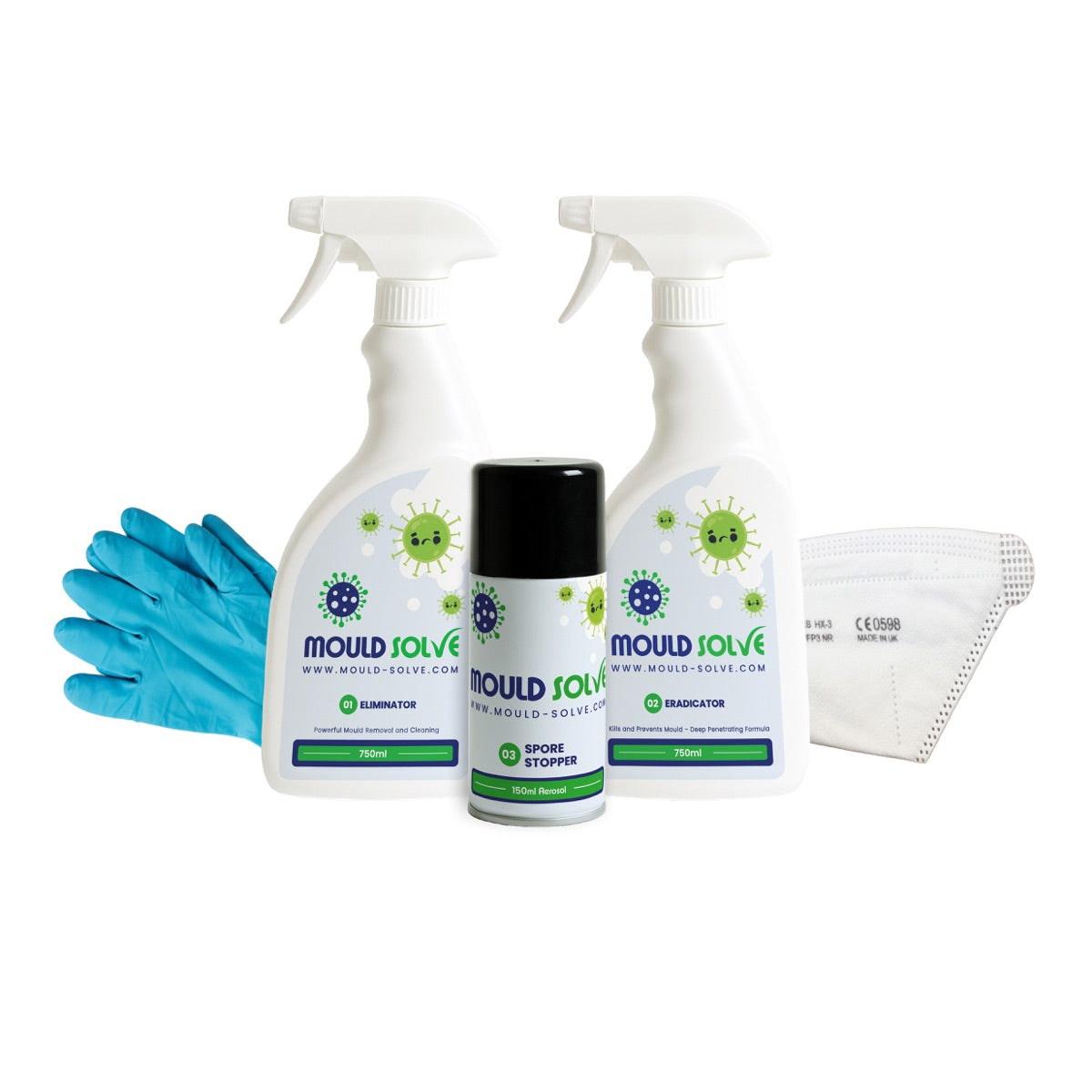
!Mould Solve Complete Mould Treatment Kit with sprays, spore stopper foggers, mask, gloves and brush
- visible mould: Mould Removal Sprays
- preparation or blocking before decorating: Mould Prevention & Primers
- final protective finish where appropriate: Anti-Mould Paint
- clearer all-in-one comparison: Mould Treatment Kits
Tenants dealing with the same problem from the other side will find the reporting steps in renting with damp and mould, which is worth sharing when a report comes in.
When not to treat it as routine
Move beyond the standard surface route when the same property sees repeated failure, persistent staining, damp-feeling walls, leak history or unusually extensive mould. In those cases, the building condition may be the more important question.

