
Bathrooms get the attention, but kitchens produce a comparable amount of moisture and are much better at hiding the results. Units, appliances, splashbacks and boxed-in pipework all create enclosed spaces where damp air sits still and unseen.
Where kitchen moisture comes from
- boiling, steaming and simmering, particularly without lids
- kettles, especially in a small kitchen
- washing up and dishwasher cycles
- washing machines and unvented tumble dryers
- drying clothes on an airer or radiator
- mopping and cleaning
A kitchen also tends to be warm when in use and cool afterwards, which is the pattern that produces condensation on the coldest surfaces once cooking stops.
The usual problem spots
- the ceiling above the hob and the kettle
- the wall behind and above the extractor
- window reveals and sills, especially behind a blind
- the corner where an external wall meets the ceiling
- inside and behind base units on external walls
- behind and under the fridge, washing machine and dishwasher
- around and under the sink, including the waste and trap
- the sealant line at the back of the worktop
- inside boxed-in pipework and under stairs cupboards off the kitchen
- grout on tiled splashbacks
The appliance spaces are worth checking properly. A slow leak from a washing machine or dishwasher connection can run for months behind a unit before anything shows on the front.
Is it mould or grease?
Kitchen surfaces collect a film of grease and cooking residue, and black marks near a hob are not always growth. The practical difference is that grease deposits usually wipe away with a degreaser and do not return in the same speckled pattern, while mould spotting tends to reappear in the same cold, damp locations.
Cleaning the grease off first is worth doing anyway, because treatment products work better on a clean surface than on a greasy one.
Treating kitchen mould safely
Kitchens need a little more care than other rooms because of food, food preparation surfaces and utensils.
- Clear the area completely, including food, utensils, chopping boards and small appliances
- Cover or move anything that cannot be removed
- Ventilate the room while you work
- Degrease the surface first where there is cooking residue
- Treat visible growth with a product suited to the surface, following its instructions
- Keep products off food preparation surfaces, and clean those separately afterwards
- Let the area dry fully before putting anything back
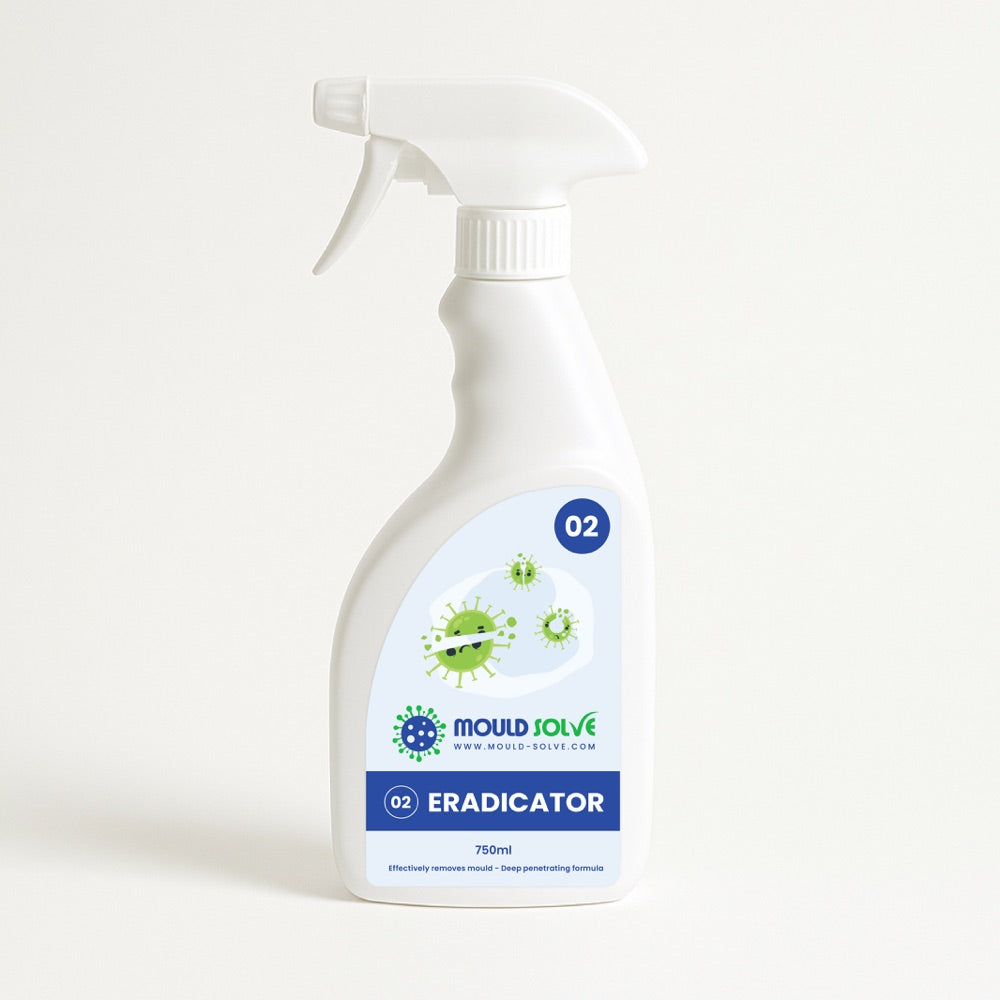
!Mould Solve Mould Eradicator Spray 750ml
Start with Mould Removal Sprays for the treatment stage, and use the protective equipment in the Mould Treatment Kits if you are working in an enclosed space such as inside a cupboard.
Always follow the product label for the surface you are treating, and keep treatments away from food, drink and food contact areas.
Getting the extractor right
The extractor is the single biggest lever in a kitchen, and it is frequently either ineffective or misunderstood.
- check whether it vents outside or simply recirculates through a filter, since recirculating hoods do not remove moisture from the room
- clean the grease filters regularly, because a clogged filter badly reduces airflow
- run it before you start cooking, not after the room has steamed up
- keep it running for a while after cooking finishes
- check the external vent or grille is clear
- use it for the kettle in a small kitchen, not just for the hob
If the hood recirculates, the moisture stays in the room, so window ventilation matters much more.
Preventing kitchen mould
- put lids on pans while boiling and steaming
- keep the kitchen door closed while cooking so moisture does not spread to cooler rooms
- open a window briefly and widely after cooking
- vent tumble dryers outside or use a condenser model
- avoid drying laundry in the kitchen where possible
- leave a small gap behind large appliances so air can move
- check under the sink and behind appliances a few times a year
- deal with worktop and sink sealant gaps promptly
- wipe window condensation rather than leaving it on the sill
Cupboards and enclosed spaces
Base units on external walls are a common hidden problem, particularly under a sink. They combine a cold wall, no airflow, stored items and often a slow leak.
- empty the unit fully to check it, rather than looking around the contents
- check the back panel and the base for staining and softness
- check the waste and trap for weeping joints
- leave the doors open for a while after treating to allow drying
- avoid storing damp cloths and mops inside closed units
FAQs
Can I use a mould spray near food preparation areas?
Clear food and utensils out of the area first, follow the product label, and clean food preparation surfaces separately afterwards. Treatments are for the affected surface, not for worktops in use.
Why is there mould in the cupboard under the sink?
It is usually a combination of a cold external wall, no ventilation and a slow leak from the waste or supply connections. Check the plumbing before assuming it is condensation.
My extractor is on but the kitchen still steams up. Why?
Common reasons are a recirculating hood that does not vent outside, clogged grease filters, a blocked external vent, or simply switching it on too late.
Should I paint the kitchen with anti-mould paint?
It is a sensible choice for a kitchen that has had problems, but only after the growth is treated and the surface is dry. See anti-mould paint vs ordinary paint.

