
Where the exposure actually comes from
Mould is a fungus, and it reproduces by releasing spores. Those spores are in the air everywhere, indoors and out, all year round. That is normal and unavoidable. What is not normal is a house where a persistently damp surface lets a colony grow and shed spores continuously into rooms people sleep and sit in.
UK government guidance for rented housing providers puts the exposure route plainly: "Most people come into contact with the substances produced by damp and mould by breathing them in." It also notes that damp and mould "can produce allergens, irritants, mould spores and other toxins that are harmful to health". So it is not only the spores. Fragments of dead mould, the compounds that give a room its musty smell, and the dust mites that thrive alongside damp all form part of what is being breathed.
This matters for how you treat mould, because anything that makes the growth airborne in bulk — dry brushing, sanding, scraping a wall back, running a vacuum without a suitable filter — increases exposure for the length of time you are doing it and for a while afterwards.
What the guidance says about health effects
The government guidance is direct: damp and mould "predominantly affect the airways and lungs", and it states that in the most severe cases they can cause serious illness or death. The effects it lists include:
- cough, wheeze and shortness of breath
- worsening of allergic conditions including asthma, allergic rhinitis and COPD
- respiratory infections, including aspergillosis
- eye irritation, skin rashes and eczema
- effects on mental health, arising from the living conditions themselves, damage to belongings, worry about health, and the frustration of waiting for repairs
Two things are worth being clear about. First, this is a summary of published guidance, not a diagnosis. If someone in the house is unwell and you think the home may be part of the picture, that is a conversation for a GP, and it is worth mentioning the damp explicitly because it is not something a doctor can see in the consulting room. Second, the strength of the link varies enormously with how much mould there is, how long it has been there, and who is living with it.
Who is more vulnerable
The same guidance identifies groups at higher risk of harm. They include:
- people with existing respiratory conditions such as asthma, COPD and other lung disease
- people with cardiovascular disease
- people who are immunocompromised, including those having cancer treatment and transplant recipients
- babies, children and young people
- older people
- pregnant women and new mothers
- people with mobility impairments, who may spend far more hours in the affected room
- people with mental health conditions
The mobility point is the one most often missed. Two people can live in the same flat with wildly different exposure, simply because one of them is out at work and the other spends the day in the room with the mouldy external wall.
The "lifestyle" argument is not supported
Anyone who has reported damp to a landlord or agent has probably been told it is down to drying washing indoors, not opening windows, or not drying the bathroom out properly. The government guidance addresses this head on. It states that it is "totally unreasonable to blame damp and mould in the home on 'lifestyle choices'", and that the root causes are building deficiencies, inadequate ventilation, inadequate heating and poor energy efficiency, rather than tenants' normal domestic activities.
That does not mean household habits are irrelevant — moisture generated indoors has to go somewhere, and how you ventilate genuinely changes the outcome. It means the building has to be capable of coping with people living in it normally. If it is not, that is a fault in the building.
What actually reduces exposure
In order of how much difference it makes:
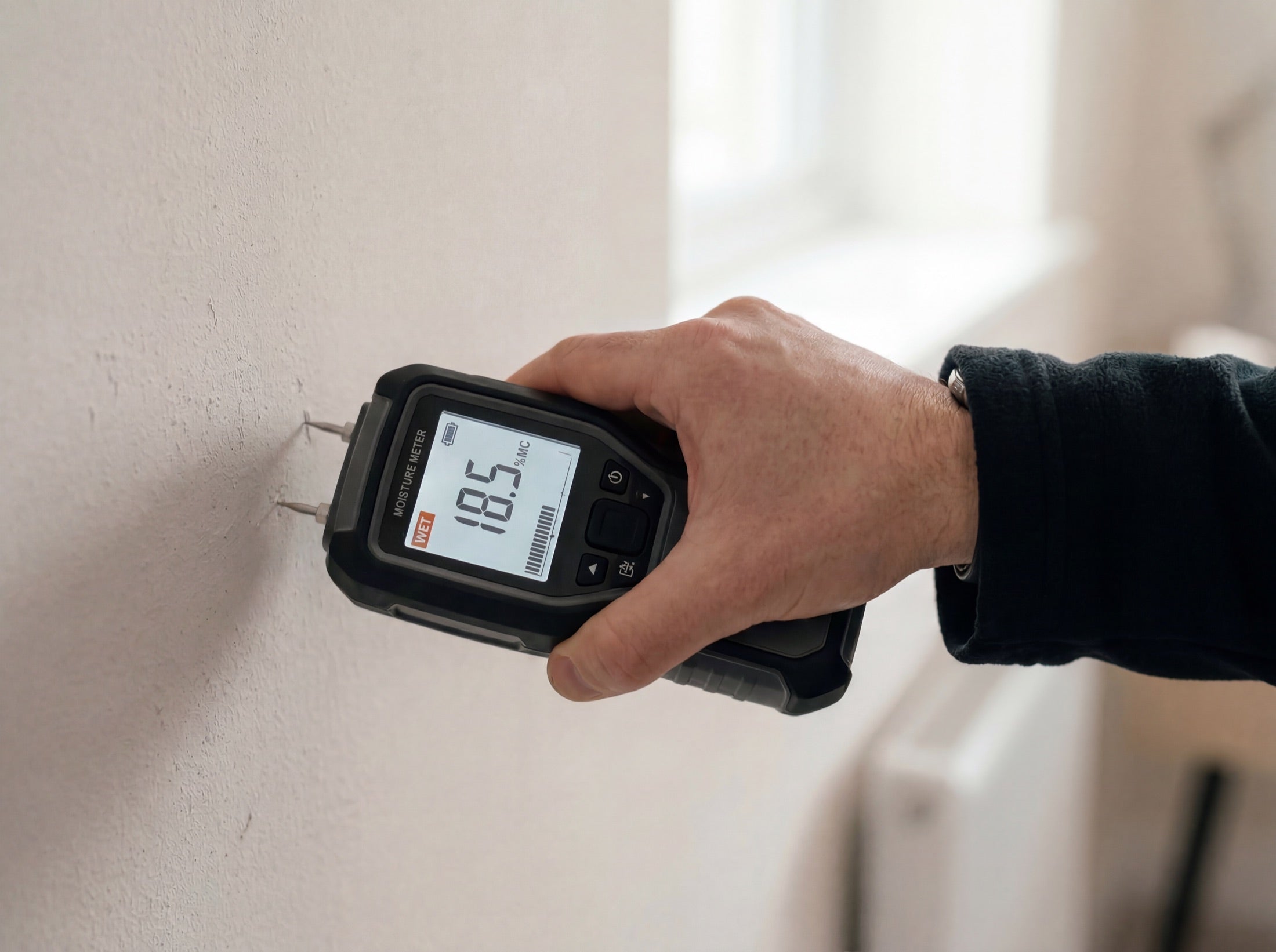
- Find and stop the moisture. Mould cannot grow on a dry surface. A leak, a failed damp-proof course, a blocked gutter soaking a wall, a bathroom with no working extractor, an unheated bedroom with a cold external wall — until the water source is dealt with, everything else is temporary.
- Remove the growth rather than covering it. Painting over live mould buries the problem for a few months at most. The colony is still there, still on a damp substrate, and it will come back through.
- Keep it wet while you work. Applying a treatment and letting it dwell, rather than attacking dry growth with a brush, keeps far more material out of the air.
- Ventilate the room you are treating and shut the door to the rest of the house, so you are not moving the problem into the hallway.
- Keep vulnerable occupants out of the room while you work and until surfaces are dry and the room has been aired.
Working safely if you do it yourself
For a small patch — the sort of thing on a bathroom ceiling or a corner behind a wardrobe — sensible protection is a disposable FFP-rated mask that fits properly against your face, disposable gloves, eye protection, and old clothes that go straight in the wash. A loose surgical-style mask does not do this job; it is not designed to filter fine particles.
Bag and bin the cloths rather than rinsing them out in a sink. If soft furnishings are affected and cannot be laundered hot, they are usually a write-off. Our mould treatment kits bundle the treatment products with the protective items so you are not starting a job and then realising you have no gloves.
When to stop and get a professional in
Call someone in rather than tackling it yourself if:
- the affected area is large — as a rough working line, more than about a square metre in one place, or several rooms affected
- the damp follows flooding or anything involving sewage
- there is mould inside the structure — in a wall build-up, under floors, or behind plaster that is blown and hollow-sounding
- someone in the household is immunocompromised or has a serious respiratory condition
- you cannot work out where the water is coming from, which usually means it is not surface condensation
Treating visible mould deals with what you can see. It does not tell you why the wall was wet. If a patch keeps returning in the same place after proper treatment, that is the building telling you something, and a damp survey is a better use of money than another bottle of anything.
