
Damp and mould in a rented home turns into an argument about blame with remarkable speed. The landlord says it is condensation from the way the tenant lives. The tenant says the property is cold, badly ventilated and was like this when they moved in.
Both can be partly right. But the legal position is clearer than the argument usually suggests, and it has changed significantly in the last couple of years.
This is general information, not legal advice. For a specific dispute, speak to Shelter, Citizens Advice or a housing solicitor.
The landlord's baseline duty
Under section 11 of the Landlord and Tenant Act 1985, landlords are responsible for the structure and exterior of the property, and for the installations that supply water, gas, electricity, sanitation and heating. That covers the roof, walls, guttering, windows, pipework and the heating system.
So if mould is caused by a leaking roof, failed pointing, a broken gutter, defective windows or a heating system that does not work, that is a repair obligation. It does not matter how tidily the tenant lives.
The Homes (Fitness for Human Habitation) Act 2018 goes further. It requires that a rented home is fit to live in at the start of and throughout the tenancy, and it explicitly lists freedom from damp as one of the criteria. Crucially, it lets tenants take a landlord to court directly, rather than waiting for the council to act. It applies to both social and private tenancies.
Awaab's Law: what it actually requires
Awaab's Law is named after Awaab Ishak, the two-year-old who died in 2020 after prolonged exposure to mould in a Rochdale flat that his family had repeatedly reported.
Phase 1 came into force on 27 October 2025 and covers emergency hazards and damp and mould presenting a significant risk to health or safety. For social landlords, the timescales are specific:
- Investigate within 10 working days of becoming aware of a potential significant hazard.
- Provide a written summary of findings to the tenant within 3 working days of the investigation concluding.
- Make the property safe within 5 working days of the investigation concluding.
- Begin any further preventative work within 5 working days, or complete it within 12 weeks where it cannot start immediately.
- Emergency hazards must be investigated and made safe as soon as reasonably practicable and within 24 hours.
These are maximum periods, not targets. From 30 November 2026, the law extends to a further set of hazards including excess cold and heat, falls, structural collapse, fire and electrical hazards, and hygiene and pest issues. A third phase in 2027 is planned to cover the remaining HHSRS hazards apart from overcrowding.
The part people get wrong
Awaab's Law currently applies to social housing only. If you rent privately, those specific timescales are not yet your landlord's legal obligation. The government has committed to extending the regime to the private rented sector, but that has not happened yet.
That does not leave private tenants without recourse. The Fitness for Human Habitation Act still applies, section 11 still applies, and the council's environmental health team can still inspect and serve notice under the Housing Health and Safety Rating System. The route is different; the underlying protection is real.
What tenants are responsible for
Tenants are generally expected to behave in a "tenant-like manner" — which in practice means using ventilation that has been provided, heating the property to a reasonable level, not blocking vents or airbricks, reporting problems promptly, and keeping the place reasonably clean.
What tenants are not responsible for is compensating with their own behaviour for a building that is structurally cold, uninsulated or unventilated. The "it's just condensation, that's lifestyle" line has been leaned on heavily for years, and both the Housing Ombudsman and the courts have pushed back on it hard. If a property cannot be heated and ventilated to a normal standard without mould appearing, that is a property problem.
If you are a tenant with mould
- Report it in writing. Email or the landlord's portal — never only by phone. Date it and keep a copy.
- Photograph everything with dates, including affected possessions.
- Log humidity readings if you can. A cheap hygrometer showing 75% in a well-ventilated room is powerful evidence.
- Keep evidence you are ventilating and heating — it removes the obvious counter-argument.
- Escalate through the formal complaints procedure if nothing happens.
- Social tenants: after exhausting the complaints process, go to the Housing Ombudsman.
- Private tenants: contact your local council's environmental health team, who can inspect and require works.
Do not stop reporting because it feels like nothing is happening. The written trail is what makes every later step possible.
If you are a landlord
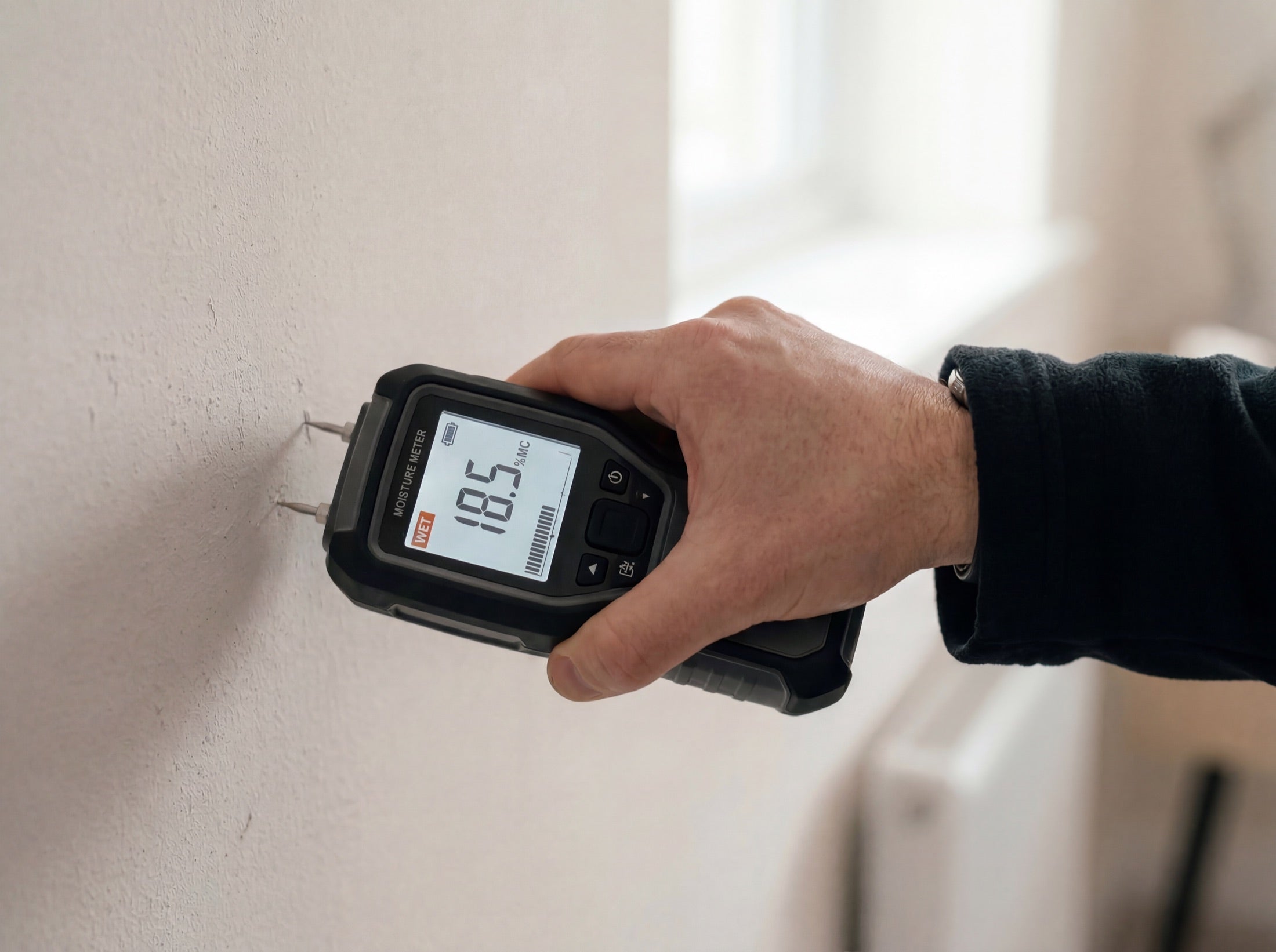
Investigate properly rather than issuing a condensation leaflet. Have someone look for the water source — a moisture meter and a proper look at the external envelope will usually settle it in an hour.
Fix the cause and the symptom together. Treating the visible growth without addressing ventilation, insulation or ingress means you will be back within a season, and the complaint history will not look good.
Document what you did and when. Under Awaab's Law, and under the ombudsman's approach generally, the record of your response is scrutinised as closely as the outcome.
Consider proactive upgrades on properties with a history: better extractor fans with humidity sensors, positive input ventilation, loft insulation, and fungicidal coatings on known cold spots. It is materially cheaper than repeated remediation and a disrepair claim.
The common ground
Nearly every damp and mould dispute is really a disagreement about where the water is coming from. Establish that, honestly and with evidence, and the responsibility question usually answers itself.
See our mould treatment and PPE kits — sized for single rooms through to whole-property remediation.
