
Mould after a leak or flood behaves differently from ordinary condensation mould. The moisture is inside the material rather than only on the surface, it is usually spread wider than the visible mark, and the timescales are longer than people expect. Treating too early is the most common mistake.
First: stop the water and record it
- Stop the source, whether that is isolating the water supply, containing a leak or clearing a blocked gutter
- Make the area safe, keeping electrics in mind around any water ingress
- Photograph everything before you move or clean it
- Contact your insurer before stripping out materials, since most policies have requirements about this
- If it is a rented property, report it to the landlord or managing agent immediately and in writing
The photographs and the report matter. Both insurers and landlords work from evidence of what happened and when.
Why drying comes before treatment
Plaster, plasterboard, timber, chipboard flooring, insulation and screed all absorb water and release it slowly. A wall can feel dry to the hand while still carrying a lot of moisture inside.
If you treat and redecorate too early:
- the treatment cannot deal with moisture inside the material
- growth continues within the wall build-up
- new paint traps moisture and often blisters or fails
- staining reappears through the finish
- the problem returns and the work is wasted
The order is always stop the water, dry the structure, then treat, then decorate.
How long drying takes
There is no single answer, because it depends on how much water was involved, what materials are affected, how well the space is ventilated and heated, and whether professional drying equipment is used.
What is realistic to expect:
- surface water and small spills: days
- a contained leak into plaster: often weeks
- saturated walls, floors and insulation after a flood: frequently months
- materials behind boxing, under floors or inside cavities: longest of all
Professional drying with equipment and monitoring is considerably faster than leaving a room to dry on its own, which is why insurers usually arrange it for anything significant.
Helping the drying process
- keep the space ventilated where outdoor conditions allow
- use steady background heat rather than intense heat, which can dry the surface while leaving the core wet
- use a dehumidifier in a closed room, as covered in do dehumidifiers stop mould?
- lift and remove saturated carpet and underlay rather than trying to dry it in place
- open up boxing, remove skirting and lift floor coverings where advised, and where your insurer agrees
- move furniture and stored items out of the affected area
- do not seal, cover or paint the area while it is still drying
Knowing when it is dry
Feeling the surface is not a reliable test. Better indicators are:
- a moisture meter reading taken over time, showing a downward trend and then stabilising
- readings taken at several depths and locations, not just one spot
- no reappearance of staining or salt marks over a period
- a drying report from whoever carried out the work
If in doubt, wait longer. Redecorating a fortnight too early costs far more than waiting a fortnight.
Treating once it is dry
Once the structure is genuinely dry, deal with the growth and the marks in the normal order.
!Mould Solve Damp and Mould Stain Block Spray 400ml
- Remove visible growth with a product suited to the surface, from Mould Removal Sprays
- Wear suitable protection, particularly where there was contaminated water or a large affected area
- Deal with water staining before decorating, using Mould Prevention & Primers
- Apply a protective finish where appropriate, from Anti-Mould Paint
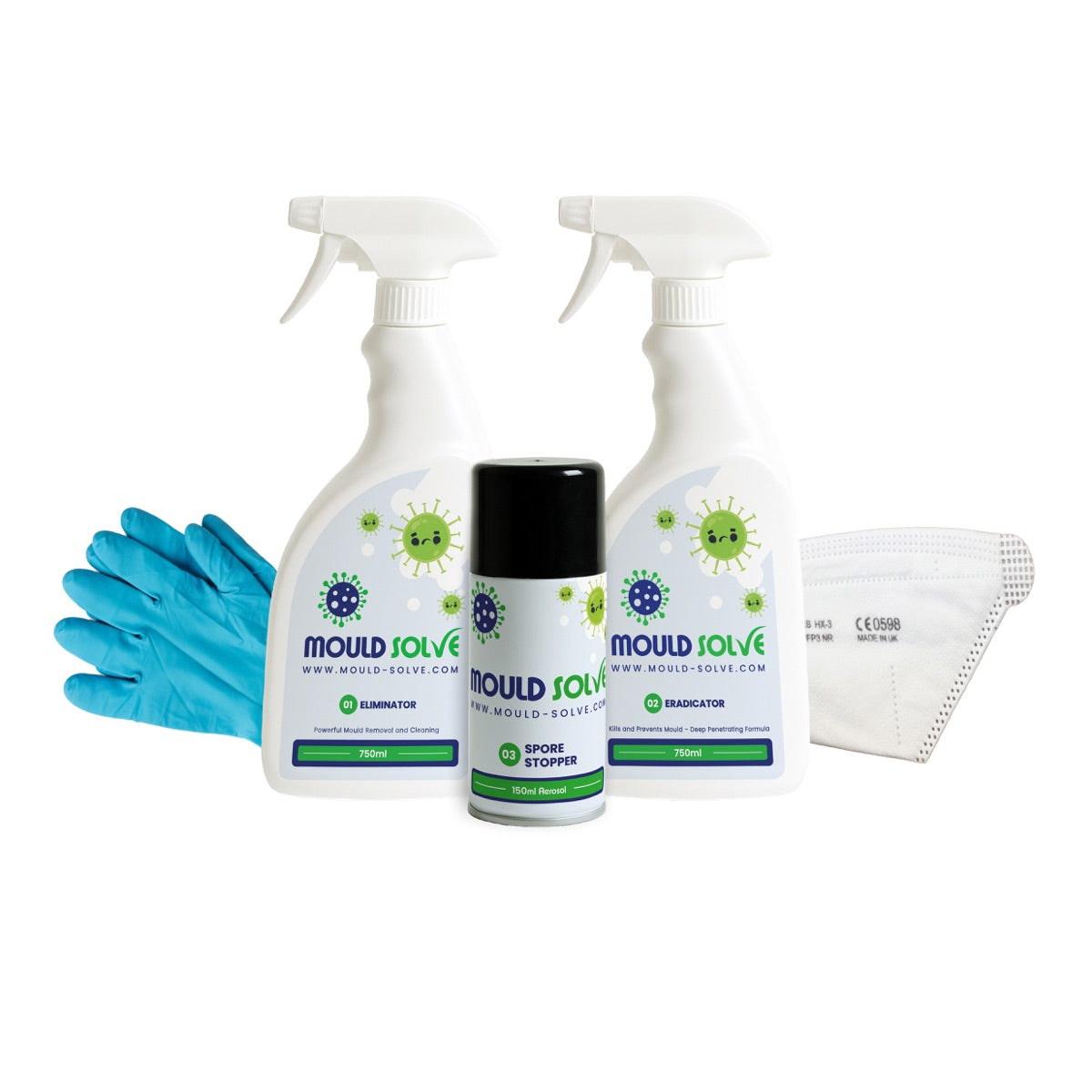
The Mould Treatment Kits bring the treatment stages together with protective equipment. There is more on staining specifically in how to treat damp marks and water stains before decorating.
What surface treatment cannot fix
Some materials do not recover from significant water damage and are replaced rather than treated. Saturated insulation, blown plaster, delaminated chipboard flooring and soaked underlay are common examples. Surface treatment is for surfaces that are sound.
Flood water in particular can be contaminated, which changes the handling requirements entirely. If the water came from drainage, sewage or a watercourse, take specialist advice rather than treating it as a domestic clean-up.
When to bring in professional help
- any flood, or water that entered from outside the property
- water that came from a drain or sewer
- large affected areas or several rooms
- water that has gone under floors, into cavities or behind insulation
- structural timbers that are wet
- anything where an insurance claim is involved
- growth that returns after a proper dry-out and treatment
There is more in when surface treatment is not enough.
FAQs
How quickly does mould appear after a leak?
It can begin within a few days on damp materials in the right conditions, which is why acting quickly on the water source matters even if you cannot treat straight away.
Can I paint over the stain once the wall is dry?
Deal with the staining first, otherwise water marks commonly show through new paint. Block the stain, then decorate.
Should I keep the heating on full to dry it out faster?
Steady background heat with ventilation or dehumidification works better than very high heat, which can dry the surface while leaving the material behind it wet.
The leak was fixed months ago but there is still a musty smell. Why?
Something is probably still damp, often under a floor, behind boxing or within insulation. See why a room smells musty.

