
When mould turns up in a bedroom or a cupboard, it rarely stops at the wall. Curtains, clothes, bedding, mattresses and stored fabric are all absorbent, and they sit exactly where the damp, still air is. This is one area where the honest answer is that surface treatment products are not the tool for the job.
Why soft furnishings are different
Products made for walls, tiles, grout and other hard surfaces are formulated for those surfaces. Fabric behaves differently: it absorbs rather than holds material on the surface, it can be marked or bleached by cleaning products, and it holds moisture deep in the fibres and the filling.
So the approach is different. Wall treatments deal with the room. Fabric is either laundered, cleaned professionally, or replaced.
What is usually recoverable
Washable items with light surface growth often recover:
- clothing, bedding and towels
- washable curtains and blinds
- loose covers and cushion covers
- fabric bags and light storage items
Practical approach:
- take affected items outside before shaking or handling where possible, so you are not spreading material through the house
- check the care label and wash at the highest temperature the fabric allows
- wash affected items separately from everything else
- dry thoroughly and completely, outdoors or in a well-ventilated space
- do not put anything away until it is completely dry
- run a hot maintenance cycle on the machine afterwards
Any item stored damp will simply start again, so complete drying is the part that matters most.
What usually needs professional cleaning
- lined or heavy curtains that are not washable
- upholstered furniture
- rugs and carpets with significant affected areas
- leather and specialist fabrics
- items with sentimental or high value
A specialist cleaner can assess whether the item is recoverable, which is a better first step than experimenting with household products on something you would rather not ruin.
Mattresses
Mattresses are the difficult case, and worth being straightforward about.
Growth on a mattress usually means moisture has been sitting underneath or within it for some time. Common causes are a bed base directly on a cold floor, a bed pushed tight against a cold external wall, a slatted base with poor airflow, or a mattress on a solid platform base with no ventilation.
The problem is that a mattress cannot be washed, cannot be dried right through easily, and the growth is often within the filling rather than only on the cover. Surface cleaning the top does not deal with what is underneath.
Where growth is significant, or where the mattress has been damp for a long period, replacement is usually the realistic answer. If someone in the household has asthma, an allergy or another respiratory condition, take that decision more readily and seek advice from a healthcare professional if you are concerned about exposure.
If you do replace it, deal with the cause first, or the new one goes the same way.
Fixing the cause
Fabric mould is almost always a symptom of the room, not a problem with the fabric.
- check the wall behind the bed or wardrobe, as covered in mould behind wardrobes and cold external walls
- move beds and large furniture a few centimetres off external walls
- allow airflow under the bed rather than using it for dense storage
- ventilate bedrooms in the morning, particularly in winter
- avoid drying laundry in bedrooms
- do not store barely dry laundry in wardrobes or drawers
- keep wardrobes on internal walls where the layout allows
- deal with condensation on windows rather than letting sills stay wet
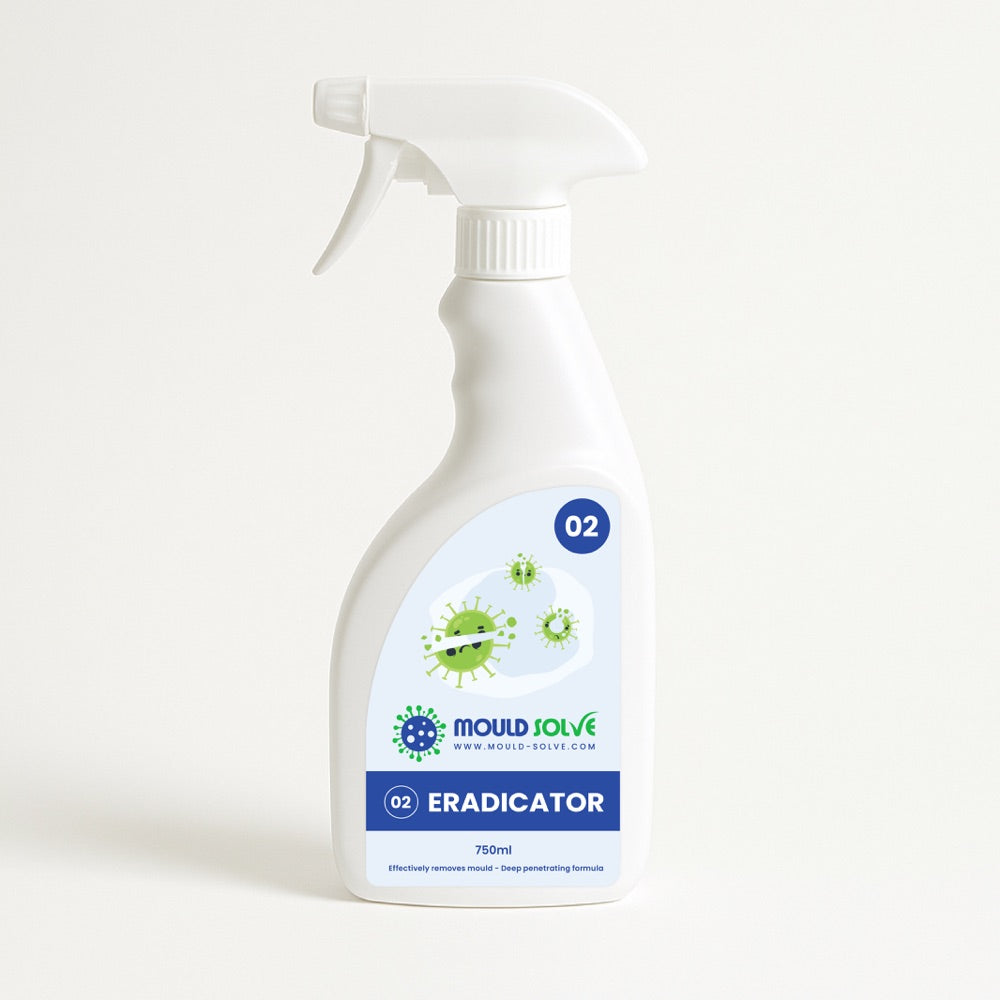
!Mould Solve Mould Eliminator Spray 750ml
Treat the room properly at the same time. For walls and hard surfaces, start with Mould Removal Sprays, and if you are redecorating the room, look at Mould Prevention & Primers and Anti-Mould Paint. The Mould Treatment Kits cover the stages together.
Storage and seasonal items
Boxed clothing, spare bedding, camping gear and luggage stored in a cold cupboard or loft are common casualties.
- store items completely dry
- avoid cardboard boxes against external walls or on cold floors
- keep storage off the floor and slightly away from walls
- check stored items at least once a year
- do not use sealed bags for anything that was not fully dry when packed
FAQs
Can I spray a wall mould product on curtains?
No. Products intended for walls and hard surfaces are not fabric cleaners. Launder washable items, or use a specialist cleaner for those that are not.
Will washing get the marks out?
Sometimes the growth is removed but staining remains, particularly on lighter fabrics. Whether the mark comes out depends on the fabric and how long it was there.
Is a mouldy mattress a health risk?
If you are worried about exposure, particularly with asthma, an allergy or a respiratory condition in the household, speak to a healthcare professional or check current NHS guidance rather than relying on general advice.
Why do only the curtains get it and not the walls?
Curtains sit against the coldest surface in the room, trap still air against the glass, and absorb the moisture that runs off the window. That combination often shows a problem before the wall does. See how to stop condensation on windows.

