
Wet weather does not cause mould on its own. What it does is change the way a house behaves, and those changes stack up until a room that coped fine last year starts spotting in the corners. Understanding the mechanism makes it much easier to get ahead of it.
The recent picture
Recent UK winters have been notably wet. Winter 2025/26 finished as a particularly wet season, with England recording one of its wettest winters on record and the UK as a whole seeing meaningfully more rainfall than the long-term average. The longer-term trend in UK climate projections also points towards wetter winters, with more days of significant rainfall, especially in western areas.
Seasonal outlooks are probabilities rather than promises, and they change as the season approaches, so it is worth checking the current Met Office outlook rather than relying on a headline from months earlier. What does not change is the practical point: homes that go into a wet season already carrying moisture, blocked gutters or an untreated patch tend to be the ones that struggle.
Why a wet season raises indoor mould risk
Walls stay wet for longer
In a dry autumn, rain soaks a wall and then dries out between showers. In a wet autumn, the gaps between showers are shorter and the drying is slower, so the wall carries more moisture for weeks at a time. A wetter wall is a colder wall, and a colder wall condenses more moisture on the inside face.
Small defects start to matter
A hairline crack in render, a slipped tile or a gutter joint that drips only in heavy rain may cause nothing at all in a dry year. Give it a wet autumn and the same defect delivers water to the same spot repeatedly, which is how a small maintenance issue becomes an internal damp patch.
Outdoor air stops helping
Ventilation works by swapping moist indoor air for drier outdoor air. In prolonged damp, mild weather the outdoor air is already carrying a lot of moisture, so airing a room does less than it would on a cold, crisp day. The usual habits produce a smaller effect.
Laundry comes indoors
Washing that would have dried outside comes in, often into a bedroom or a closed room with a radiator. A single load can release a substantial amount of water vapour into the house, and in a wet month this happens repeatedly.
Doors and windows stay shut
Wind and rain mean windows stay closed and trickle vents get shut. Moisture accumulates in exactly the period when surfaces are cooling.
Mild and wet is worse than cold and dry
It is a common surprise that a mild, wet winter often produces more mould complaints than a cold, dry one. A cold, dry spell brings low outdoor humidity, so ventilating a room genuinely dries it. A mild, wet spell brings high outdoor humidity and often less heating use, so surfaces stay cool while the air stays damp. That combination suits mould growth well.
What to do about it
The response is the same regardless of what the forecast eventually does, which is the useful part.
Keep water out of the building. Clear gutters, check downpipes, look at the roof, clear drains, check render, pointing and sealant. There is a full list in autumn outdoor jobs.
Reduce moisture produced indoors. Lids on pans, extractor fans used properly, tumble dryers vented, and a plan for where laundry dries. A dehumidifier earns its place in a wet season for laundry drying specifically, as covered in do dehumidifiers stop mould?
Ventilate at the right moments. Short, wide ventilation after showering, cooking and drying clothes does more than a permanently cracked window, particularly when outdoor air is damp.
Keep surfaces warmer. Steadier background heat, furniture off external walls, and curtains not trapping cold glass against the room.
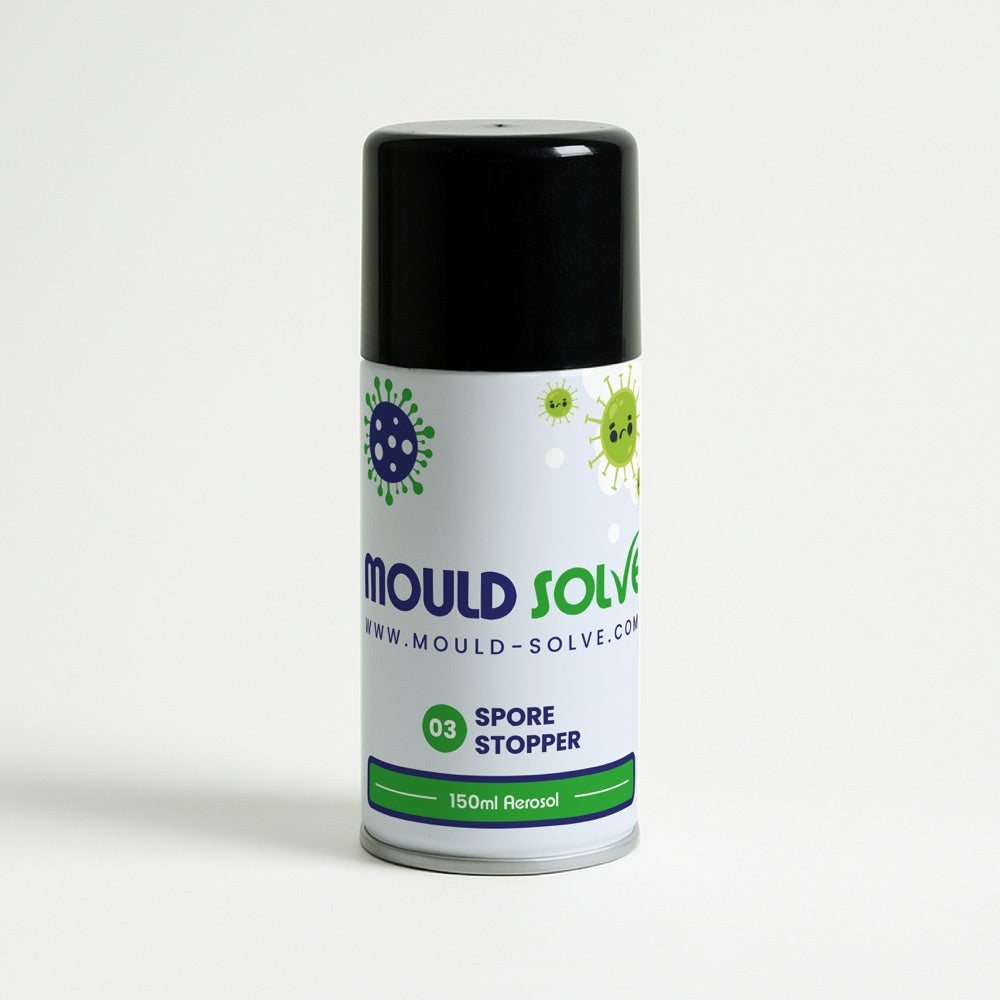
!Mould Solve Spore Stopper Mould Fogger 150ml
Treat early and protect. Deal with the first spotting rather than waiting for the patch to spread. Start with Mould Removal Sprays, and if you are redecorating a vulnerable room, add the protective stage with Mould Prevention & Primers and Anti-Mould Paint. The Mould Treatment Kits cover the stages together.
What a wet season looks like inside
Watch for these through the autumn, and act on the first one you see:
- condensation on glass in the morning that does not clear
- black spotting in the top corners of external walls
- reveals and sills staying wet
- a musty smell in a bedroom or cupboard
- damp patches appearing after heavy rain in particular, rather than after cold nights
- paint bubbling or lifting on a specific wall
That last group matters. Damp that follows rainfall rather than cold nights usually points to water getting in rather than condensation, and that needs the source found rather than a surface treatment. There is more in mould vs damp and when surface treatment is not enough.
FAQs
Does heavy rain cause mould directly?
Not directly indoors. It raises the moisture load in walls and finds any defect that lets water in, both of which make internal mould more likely.
Why was my house fine last year and not this year?
Wetter or milder conditions, a defect that has developed since, a change in how the house is used, or laundry and heating habits that have shifted. Often it is a combination.
Should I keep the heating on low all the time in a wet winter?
Steadier background warmth generally helps more than short bursts of high heat, because it keeps surface temperatures up. The right balance depends on the home and running costs.
Is it too late to prepare once autumn has started?
No. The outside checks and early treatment are worth doing at any point, and doing them in October is far better than doing them in February.

